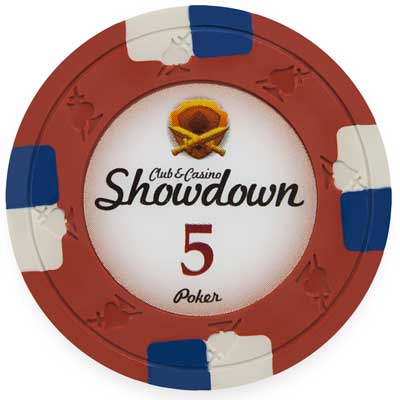
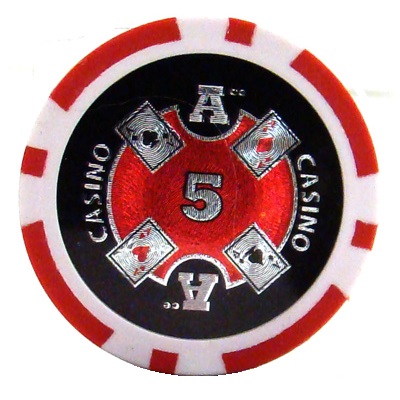
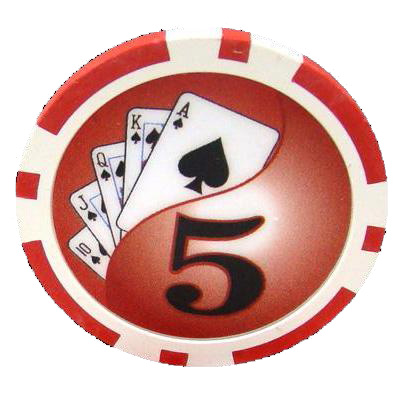
Poker chips that show a denomination like 1, 5, 10, 25, 100, 500, 1000 without a dollar sign are one of the most flexible options you can buy. Because the chip face does not lock you into “$1” or “$5,” the same set can be used for cents, dollars, euros, pounds, pesos, or almost any other currency system. That makes no-dollar-denomination chips ideal for home cash games, travel sets, mixed-stakes groups, and hosts who want one chip set that can do almost everything.
The biggest advantage is flexibility. A 1 / 5 / 10 / 25 structure can support micro-stakes games like 1¢/2¢ or 5¢/10¢, but it can also scale into larger games where those same chips represent dollars or other local currency units. This guide explains how these chips work, who they are best for, how to assign value, and how to build a practical chip set around them.
If you want a chip set that can handle multiple game types and multiple stake levels, chips with no dollar sign are usually the smartest choice.
They are especially strong when you want a practical lineup like: 1, 5, 10, 25, 100, 500, 1000.
A poker chip with “$25” printed on it forces one interpretation. A chip with just “25” gives you room to define what that number means for the game you are running. That flexibility matters more than many buyers realize.
These chips are especially useful for a few types of buyers.
If you sometimes run 5¢/10¢ and other times run $1/$2 or $1/$3, no-dollar chips are much easier to reuse.
A single set with clean denominations can cover casual cash games, deeper games, and even tournament use if planned well.
Mixed groups often don’t want chips that feel locked to U.S. dollars. A plain “25” or “100” is more neutral and more practical.
If this is your first major chip purchase, no-dollar-denomination chips are usually a safer long-term decision because they are harder to outgrow.
The most useful part of a no-dollar lineup is how naturally the lower denominations scale. The classic 1 / 5 / 10 / 25 family is especially strong because it works cleanly for very small games and still makes sense at larger values.
| Chip | Micro-Stakes Example | Standard Stakes Example | Other Stakes Example | Why It Works |
|---|---|---|---|---|
| 1 | 1¢ | $1 | €1 / £1 / 1 unit | Flexible base chip for blinds and small bets |
| 5 | 5¢ | $5 | €5 / £5 / 5 units | Natural next step from base value |
| 10 | 10¢ | $10 | €10 / £10 / 10 units | Useful bridge denomination for smoother betting |
| 25 | 25¢ | $25 | 25 units | Excellent for quarter-style increments or compact stacks |
In micro-stakes games, these chips let you run clean blind structures such as 1¢/2¢, 2¢/5¢, or 5¢/10¢. In larger games, the exact same chips can represent $1/$2, $2/$5, or more abstract local-unit games. This is exactly why buyers who want long-term versatility often prefer no-dollar-denomination chips.
The best assignment depends on the blinds you want to use, how deep you want players to buy in, and how many chips you want on the table.
This works well for penny and nickel games where you still want enough chip movement to feel like real poker.
This structure is common when you want fewer chips on the table and faster counting.
Many home hosts simply tell the table that chips are in “units.” For example, 1 unit / 2 units blinds. That keeps the set usable for any currency without changing the physical chips.
Yes. In fact, chips with no dollar sign often make strong tournament chips because tournament values are not supposed to represent direct cash anyway. The numbers simply represent tournament units.
A set that includes 25, 100, 500, 1000, and 5000 can transition very naturally into tournament use. If your set also includes 1, 5, 10, you may use those for specialty formats, home structures, or very small-stakes cash games.
| Chip | Possible Tournament Role | Notes |
|---|---|---|
| 25 | Starting low denomination | Good for early-level blind precision |
| 100 | Core tournament workhorse | Common starting-stack component |
| 500 | Mid-value chip | Useful once blinds increase |
| 1000 | Higher-value stack builder | Helps keep stacks compact |
| 5000+ | Late-stage tournament chip | Useful for color-ups and final-table play |
The right total depends on whether you are building a travel set, a cash-game set, or a larger multi-table home set.
Great for many home cash games and small tournaments. Usually enough for around 6 to 10 players if the chip breakdown is planned well.
A strong middle ground if you want more flexibility for mixed cash/tournament use.
Best if you host often, run deeper games, or want room to support multiple structures without running short on key denominations.
A chip set is less useful if it lacks enough low-end chips for blinds, antes, and smaller bets. This matters even more in micro-stakes games.
A clean progression like 1 / 5 / 10 / 25 / 100 / 500 / 1000 is much easier to use than a random assortment.
If your group likes smaller, frequent bets, low denominations matter. If your games are deeper and larger, you will want enough mid and high chips to keep stacks manageable.
The lack of a dollar sign is a flexibility feature, not a downgrade. For many buyers, it is actually the better design choice.
These chips are best for buyers who want:
Chips with no dollar sign are more flexible because they can represent cents, dollars, euros, pounds, pesos, or simple tournament units. One set can be reused across many game types and stake levels.
Yes. Those denominations work very well for micro-stakes games because they can represent cents, such as 1¢, 5¢, 10¢, and 25¢. They also scale cleanly into larger games where they represent dollars or other currency units.
Yes. The same chips can be assigned higher values like $1, $5, $10, and $25 or equivalent units in another currency. That is one of their biggest advantages.
Yes. They often work very well for tournaments because tournament values are unit-based, not direct cash values. Denominations like 25, 100, 500, and 1000 are especially useful.
A very practical lineup is 1, 5, 10, 25, 100, 500, and 1000. That mix supports small cash games, micro-stakes games, and many home tournament structures.
A 500-chip set is often enough for many home games, but a 1000-chip set gives you more long-term flexibility if you host regularly or want to support both cash games and tournaments.